Table of Contents
About the Author: This comprehensive guide is written by experienced financial professionals with over 15 years of combined trading experience across forex, cryptocurrency, and equity markets. Our team holds relevant certifications including CFA and FRM designations, ensuring you receive expert-level insights into trading psychology.
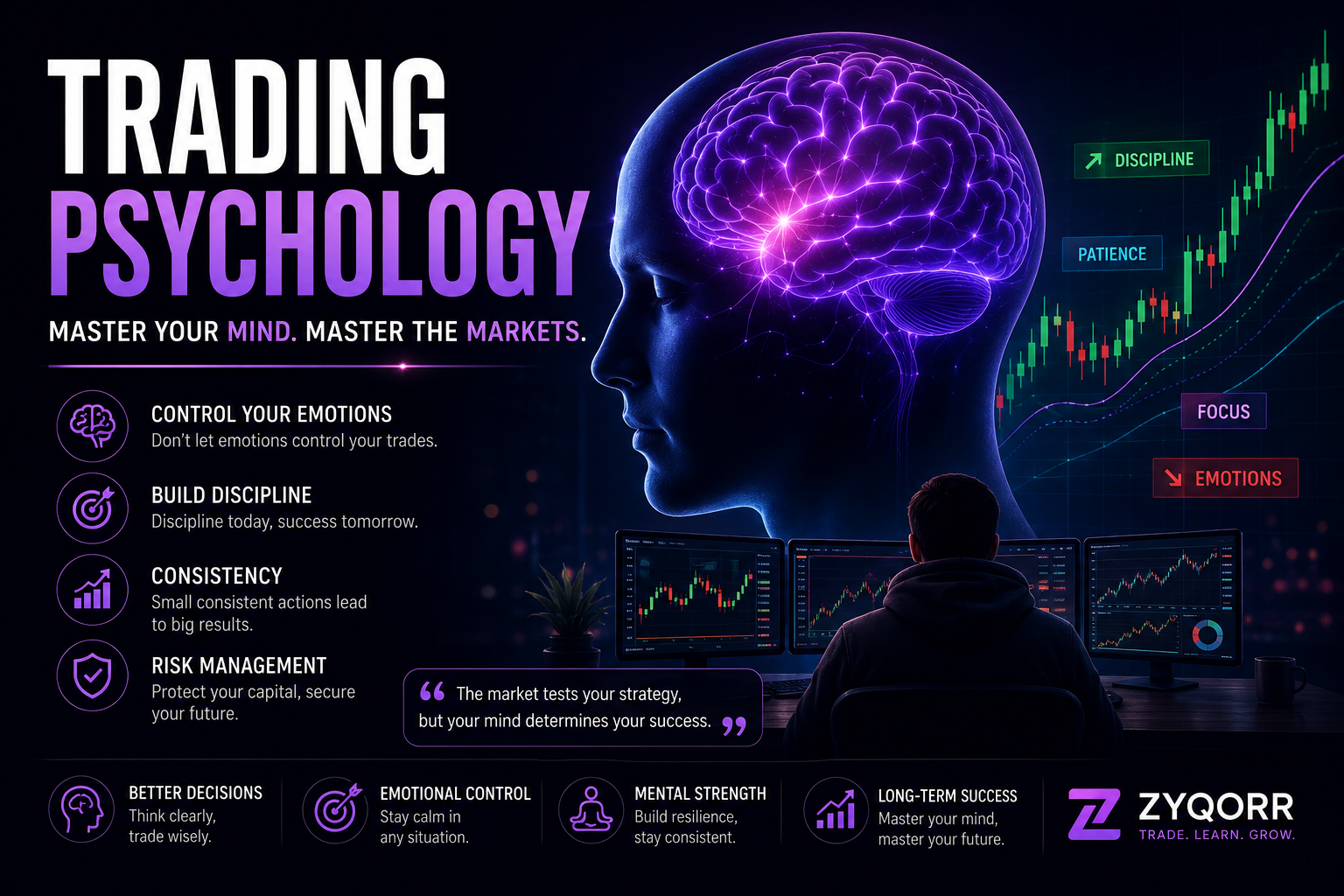
Ever wonder why some traders succeed while others fail, even when using the same strategies? The answer often lies in trading psychology. Your mental state plays a huge role in your trading success, sometimes even more than your technical skills or market knowledge.
Understanding Trading Psychology

What is trading psychology? Simply put, it’s the emotional and mental state that affects your trading decisions. It includes your feelings, thoughts, and behaviors when you buy and sell financial instruments like stocks, forex, or cryptocurrencies.
Trading psychology covers everything from how you handle stress to how you react to winning and losing trades. It’s about understanding why you make certain decisions and learning to control your emotions instead of letting them control your trades.
Think of it this way: you might have the best trading strategy in the world, but if you can’t stick to it because of fear or excitement, you’ll likely lose money. Your mind can be your greatest asset or your biggest obstacle in trading.
The Science Behind Trading Psychology
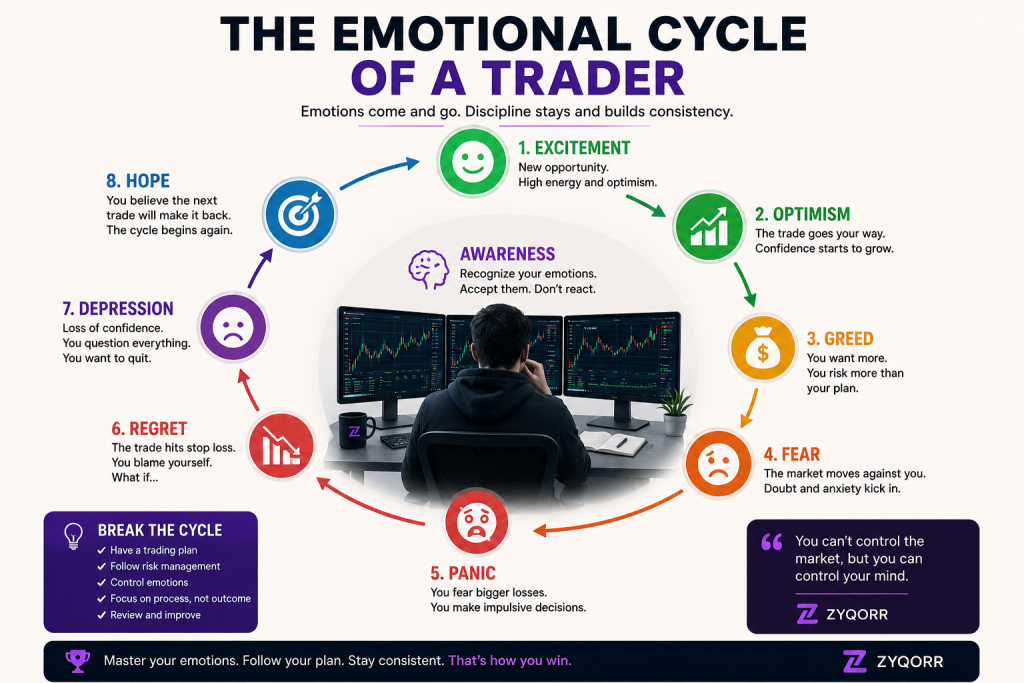
Research shows that our brains aren’t naturally wired for trading. We have built-in biases that helped our ancestors survive but can hurt us in modern financial markets. According to studies published by the Journal of Behavioral Finance, we’re programmed to avoid losses more than we seek gains, which can lead to poor trading decisions.
Studies in behavioral finance reveal that emotions like fear, greed, hope, and regret significantly impact trading performance. The CFA Institute has extensively documented how cognitive biases affect investment decisions. Understanding these emotional patterns is the first step toward becoming a better trader.
Why Trading Psychology Matters More Than You Think
Many new traders focus entirely on learning technical analysis or fundamental analysis while ignoring the psychological aspect. This is a big mistake. Here’s why trading psychology is so important:
Consistency is Key: Without proper mental discipline, you might follow your trading plan perfectly for weeks, then throw it all away during one emotional moment. Psychology helps you stay consistent with your approach.
Risk Management: Emotional trading often leads to taking bigger risks than planned. Fear of missing out might make you invest too much money, while fear of losing might make you exit profitable trades too early.
Long-term Success: The markets will test your emotions repeatedly. Traders who master their psychology can handle the ups and downs better and stay in the game longer.
Real-World Impact
Consider this scenario: You have a trading strategy that wins 60% of the time with small profits and loses 40% with small losses. Mathematically, this should be profitable. However, if emotions cause you to cut your winners short and let your losers run, you’ll lose money despite having a winning strategy.
This happens to countless traders every day. They have good strategies but poor execution due to psychological factors. According to research from FINRA, emotional decision-making is one of the primary reasons retail traders underperform market indices.
Common Psychological Trading Mistakes
Understanding common psychological mistakes can help you avoid them. Here are the most frequent ones:
Overconfidence After Wins
After a few successful trades, many traders become overconfident. They start taking bigger risks or abandon their proven strategies, thinking they’ve “figured out” the market. This often leads to giving back all their gains and more.
The Securities and Exchange Commission (SEC) warns that overconfidence can lead to excessive trading and poor risk management.
Revenge Trading
When traders lose money, they sometimes try to “get even” with the market by making larger, riskier trades. This emotional response rarely works and usually results in even bigger losses.
Analysis Paralysis
Some traders become so afraid of making the wrong decision that they spend too much time analyzing and miss good opportunities. Fear of being wrong can be just as harmful as being reckless.
FOMO (Fear of Missing Out)
Seeing others make money or watching a market move without you can trigger FOMO. This leads to jumping into trades without proper analysis or entering at the worst possible times.
Confirmation Bias
Traders often look for information that confirms what they want to believe rather than seeking objective analysis. This can lead to holding losing positions too long or ignoring warning signs.
Also Read: 7 Tech Trends That Will Reshape Your Life by 2026
Fear and Greed: The Twin Enemies of Trading
Fear and greed are the two most powerful emotions in trading. Learning to recognize and manage them is essential for success.
Understanding Fear in Trading
Fear shows up in many ways:
- Fear of losing money: This can prevent you from taking good trades or cause you to exit profitable ones too early
- Fear of being wrong: This might stop you from admitting mistakes and cutting losses
- Fear of missing out: This can push you into bad trades just because others are making money
Managing Fear
To manage fear:
- Start with small position sizes until you build confidence
- Have a clear exit plan before entering any trade
- Practice with a demo account first
- Remember that losses are part of trading
- Focus on your process, not just profits
Understanding Greed in Trading
Greed is equally dangerous:
- It makes you hold winning trades too long, hoping for bigger profits
- It pushes you to risk more money than you can afford
- It causes you to abandon risk management rules
- It leads to overtrading
Managing Greed
To control greed:
- Set profit targets before entering trades
- Take partial profits as trades move in your favor
- Stick to your position sizing rules
- Remember that there will always be another opportunity
- Focus on consistent small gains rather than home runs
Building Mental Discipline in Forex Trading
Forex trading presents unique psychological challenges due to its 24-hour nature and high volatility. The Bank for International Settlements reports daily forex trading volumes exceed $6.6 trillion, making it the world’s most liquid market.
Develop a Routine
Create a daily trading routine that includes:
- Market analysis at specific times
- Predetermined trading hours
- Regular breaks to avoid fatigue
- Post-trade review sessions
Set Clear Goals
Instead of vague goals like “make money,” set specific, measurable objectives:
- Target monthly return percentages
- Maximum daily loss limits
- Number of trades per day or week
- Risk-reward ratios for each trade
Practice Patience
Forex markets can be slow at times and explosive at others. Develop patience by:
- Waiting for your setup to appear
- Not forcing trades when conditions aren’t right
- Taking breaks when frustrated
- Focusing on quality over quantity
Learn from Mistakes
Keep a trading journal that records:
- Why you entered each trade
- Your emotional state during the trade
- What you learned from wins and losses
- Patterns in your decision-making
Crypto Trading Psychology: Unique Challenges
Crypto trading brings its own set of psychological challenges due to extreme volatility and 24/7 markets. According to CoinMarketCap, the cryptocurrency market cap fluctuates by billions daily.
Dealing with Extreme Volatility
Cryptocurrency markets can move 20-50% in a single day. This extreme volatility can trigger intense emotions. To handle this:
- Never invest more than you can afford to lose
- Expect wild price swings as normal
- Use smaller position sizes than in traditional markets
- Don’t check prices constantly
FOMO in Crypto Markets
The crypto space is full of stories about people making millions overnight. This creates intense FOMO. Combat this by:
- Remembering that for every winner, there are many losers
- Sticking to your planned investment amounts
- Not comparing your results to others
- Focusing on long-term goals rather than quick gains
Information Overload
The crypto world moves fast, with constant news and social media chatter. Manage information overload by:
- Following only trusted news sources
- Limiting social media consumption
- Focusing on fundamental analysis rather than hype
- Making decisions based on your research, not others’ opinions
Practical Strategies to Control Your Trading Mind


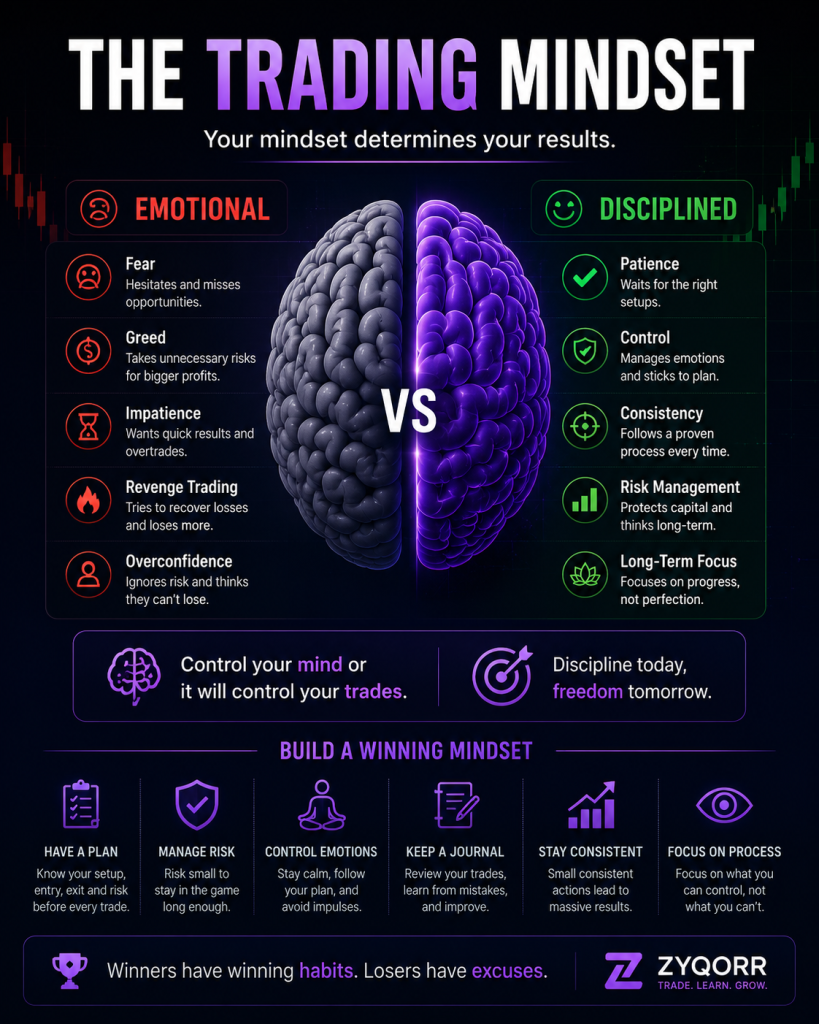
Here are actionable strategies you can implement immediately to improve your trading psychology:
Meditation and Mindfulness
Regular meditation can help you:
- Stay calm during volatile markets
- Make decisions from a clear state of mind
- Recognize emotional states before they affect your trading
- Develop better focus and concentration
Research from Harvard Medical School shows meditation reduces stress and improves decision-making abilities.
Physical Exercise
Exercise helps manage stress and emotions by:
- Releasing endorphins that improve mood
- Providing a healthy outlet for frustration
- Improving sleep quality
- Increasing overall mental resilience
Visualization Techniques
Spend time visualizing different scenarios:
- How you’ll handle a big loss
- Your reaction to a series of winning trades
- Sticking to your plan during emotional moments
- Achieving your long-term trading goals
Support Networks
Connect with other traders through:
- Trading forums and communities
- Local trading groups
- Mentorship programs
- Online courses with interactive elements
Having people who understand your challenges can provide emotional support and accountability.
Creating a Trading Plan to Combat Emotional Trading
A well-designed trading plan is your best defense against emotional decision-making. The Commodity Futures Trading Commission (CFTC) emphasizes the importance of having a written trading plan.
Entry and Exit Rules
Define exactly when you’ll enter and exit trades:
- Specific technical indicators or patterns
- Fundamental criteria that must be met
- Clear stop-loss and take-profit levels
- Position sizing rules
Risk Management Guidelines
Establish firm rules about risk:
- Maximum percentage of account to risk per trade (typically 1-2%)
- Daily and monthly loss limits
- Position sizing formulas
- Correlation limits if trading multiple instruments
Review and Adjustment Processes
Plan regular reviews of your performance:
- Weekly analysis of trades and emotions
- Monthly strategy assessments
- Quarterly goal reviews
- Annual plan updates
Emergency Procedures
Know what to do when emotions run high:
- Step away from the computer
- Call a trusted trading friend
- Review your why for trading
- Take a predefined break from trading
The Role of Risk Management in Trading Psychology
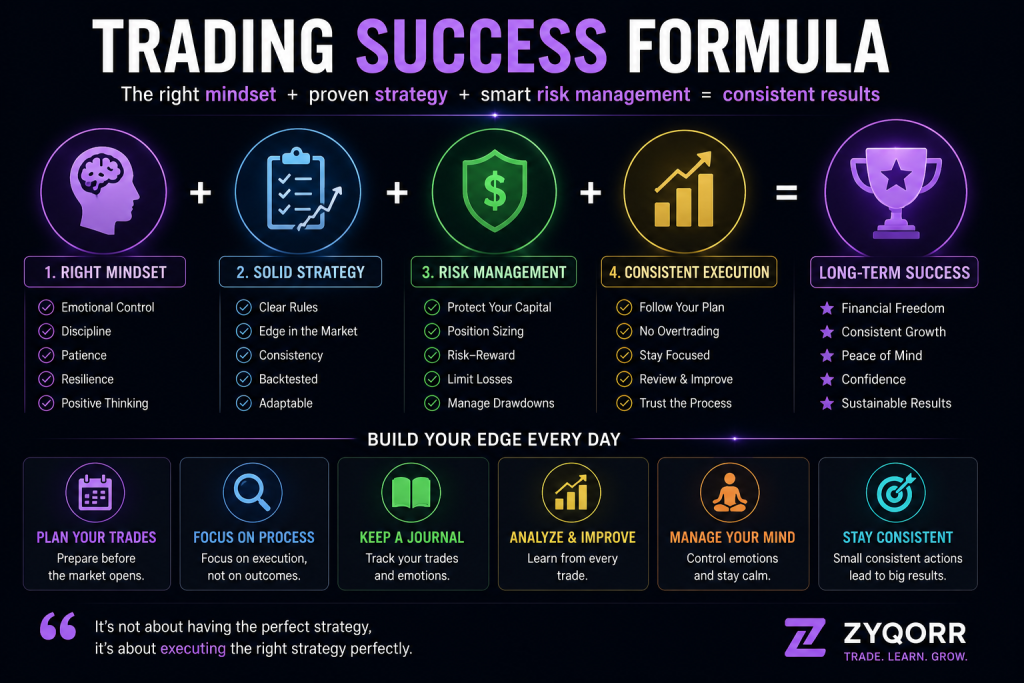
Good risk management isn’t just about protecting your money—it’s about protecting your mental state. Here’s how proper risk management supports healthy trading psychology:
Reduces Stress
When you know exactly how much you can lose on any trade, it’s easier to stay calm and make rational decisions. Stress often comes from uncertainty, so having clear risk parameters provides peace of mind.
Prevents Catastrophic Losses
Big losses can destroy your confidence and lead to emotional trading. By limiting your risk per trade to 1-2% of your account, you ensure that no single trade can seriously damage your account or your psyche.
Enables Consistency
With proper position sizing, you can maintain the same approach regardless of recent wins or losses. This consistency is crucial for long-term success and emotional stability.
Building Confidence
Knowing you have a solid risk management plan builds confidence in your approach. This confidence helps you stick to your strategy during difficult periods.
How to Bounce Back from Trading Losses
Every trader faces losses—it’s how you handle them that matters. Here’s how to bounce back psychologically from trading losses:
Accept That Losses Are Normal
Understand that even the best traders lose money regularly. Professional traders typically win only 50-60% of their trades. Losses don’t mean you’re a bad trader; they’re simply part of the business.
Analyze Without Emotion
After a loss, take time to analyze what happened:
- Was it a good trade that didn’t work out?
- Did you follow your plan?
- What can you learn for next time?
- Were there any warning signs you missed?
Don’t Trade Immediately After a Big Loss
Take a break after significant losses to:
- Process your emotions
- Regain perspective
- Avoid revenge trading
- Return with a clear mind
Focus on Process, Not Outcomes
Judge your trading by how well you follow your plan, not just by profits and losses. A good trade that loses money is better than a bad trade that makes money because good process leads to long-term success.
Start Small When Returning
When you’re ready to trade again after a loss:
- Reduce your position sizes temporarily
- Focus on high-probability setups
- Build confidence with small wins
- Gradually return to normal position sizes
Learn and Improve
Use losses as learning opportunities:
- Update your trading plan if needed
- Identify patterns in your mistakes
- Seek education or mentoring
- Practice new strategies on demo accounts first
Also Read: What Is Stock Trading? Ultimate Beginner’s Guide to Profitable Stock Trading in India (2026)
Frequently Asked Questions
What is trading psychology and why is it important?
Trading psychology refers to the emotional and mental factors that influence trading decisions. It’s important because emotions like fear and greed can override logical decision-making, leading to poor trading outcomes even with good strategies.
How can I improve my trading psychology?
You can improve your trading psychology by:
- Developing a detailed trading plan
- Practicing risk management
- Using meditation and mindfulness techniques
- Keeping a trading journal
- Starting with smaller position sizes
- Taking regular breaks from trading
What are the most common psychological trading mistakes?
The most common mistakes include:
- Revenge trading after losses
- Overconfidence after wins
- Fear of missing out (FOMO)
- Analysis paralysis
- Confirmation bias
- Emotional position sizing
How do emotions affect forex trading specifically?
In forex trading, emotions can be particularly challenging due to:
- 24-hour market operation leading to fatigue
- High leverage amplifying emotional responses
- Currency pair correlations creating complex decisions
- Economic news causing sudden volatility
Is crypto trading more psychologically challenging than traditional trading?
Crypto trading can be more psychologically challenging due to:
- Extreme price volatility
- 24/7 market operation
- Information overload from social media
- FOMO from success stories
- Regulatory uncertainty
How do I control fear and greed in trading?
Control fear and greed by:
- Setting predetermined entry and exit points
- Using proper position sizing
- Taking partial profits
- Having clear stop-loss levels
- Focusing on process over profits
- Regular meditation and stress management
What should I do after a big trading loss?
After a big loss:
- Take a break from trading
- Analyze what went wrong objectively
- Review your risk management rules
- Consider reducing position sizes temporarily
- Seek support from other traders or mentors
- Focus on learning from the experience
How important is a trading plan for psychology?
A trading plan is crucial for psychology because it:
- Removes emotional decision-making
- Provides clear rules to follow
- Reduces stress and uncertainty
- Helps maintain consistency
- Prevents impulsive trades
Financial Disclaimer
Important Risk Warning: Trading foreign exchange (forex), cryptocurrency, and other financial instruments involves substantial risk and may not be suitable for all investors. The high degree of leverage can work against you as well as for you. Before deciding to invest in foreign exchange or cryptocurrency markets, you should carefully consider your investment objectives, level of experience, and risk appetite.
Past Performance Not Indicative: Past performance is not indicative of future results. The possibility exists that you could sustain a loss of some or all of your initial investment and therefore you should not invest money that you cannot afford to lose.
Educational Content Only: The information provided in this article is for educational purposes only and should not be construed as investment advice. Always consult with a qualified financial advisor before making investment decisions.
No Guarantees: No representation is being made that any account will or is likely to achieve profits or losses similar to those discussed in this article. The actual performance of any trading strategy may vary significantly from theoretical results.
Regulatory Compliance: Ensure you understand and comply with all applicable laws and regulations in your jurisdiction before engaging in any trading activities.
Conclusion
Trading psychology is the foundation of successful trading, whether you’re involved in forex trading, crypto trading, or any other form of trading. Your ability to control emotions, stick to your plan, and maintain discipline will ultimately determine your success more than any technical indicator or strategy.
Remember that developing good trading psychology takes time and practice. Be patient with yourself as you learn to recognize and manage your emotions. Start by implementing one or two strategies from this guide, then gradually add more as you become comfortable.
The markets will always test your emotions, but with proper preparation and mindset, you can handle whatever they throw at you. Focus on the process, manage your risk, and stay committed to continuous improvement.
What’s your biggest psychological challenge in trading? Share your experiences in the comments below, and let’s learn from each other’s journeys toward better trading psychology.
Ready to improve your trading psychology? Start by creating a simple trading journal today and track not just your trades, but your emotions and thoughts during each trade. This simple step can provide valuable insights into your psychological patterns and help you become a more disciplined, successful trader.